Heritage / History of the brand

Since 1962

Ceramica Bardelli: the history of author-designed ceramics since 1962

Explore the collection archive
Arnaldo Bardelli, founder of Ceramica Bardelli
Image from the Gruppo Bardelli heritage timeline

Ceramica Bardelli’s story spans more than sixty years of manufacturing, visual culture and decorative research. From Arnaldo Bardelli’s first productions to collaborations with international design figures, ceramic tiles become a medium of artistic expression.

1962. The beginnings

Arnaldo Bardelli establishes La Gres Ceramica S.a.S. in Bareggio, near Milan, in 1962. In 1965 he builds a factory in Vittuone, setting industrial production in motion under the Ceramica Bardelli name. Drawing, decoration and craftsmanship help define the brand’s identity.

The first collections

Boquet (1966), Teorema (1967), Pezzo T (1971) and Fili (1977) mark the early stages of exploration. I Gessati (1978) and Le maschere (1988) later extend the expressive repertoire, bringing graphic language into spatial design.

A dialogue with designers

The Gio Ponti (1990) and Soli e lune Fornasetti (1991) collections highlight the relationship between ceramic production and design culture. Later work includes Ronald van der Hilst (2007) and Marcel Wanders (2013).

A living heritage

The second generation of the Bardelli family joins the company in 1982, followed by the third in 2015. The brand continues to combine craft memory, manufacturing technologies and new design languages. Historical collections are not necessarily products currently available.

Key dates

  1. 1962Arnaldo Bardelli establishes La Gres Ceramica in Bareggio.
  2. 1965First factory in Vittuone; Ceramica Bardelli S.p.A. is established.
  3. 1966–1977Boquet, Teorema, Pezzo T and Fili.
  4. 1990–1991Gio Ponti and Soli e lune Fornasetti collections.
  5. 2013Collections by Marcel Wanders.
  6. 2015The third generation joins the business.

Archive notes

Sources: the official Gruppo Bardelli history and corporate Company Profile.

THE COLLECTION ARCHIVE

Historical collection archive

A growing index of the collections, patterns and design languages that have shaped the brand. The archive documents cultural heritage; it does not itself confirm the commercial availability of a collection.

Historical archive

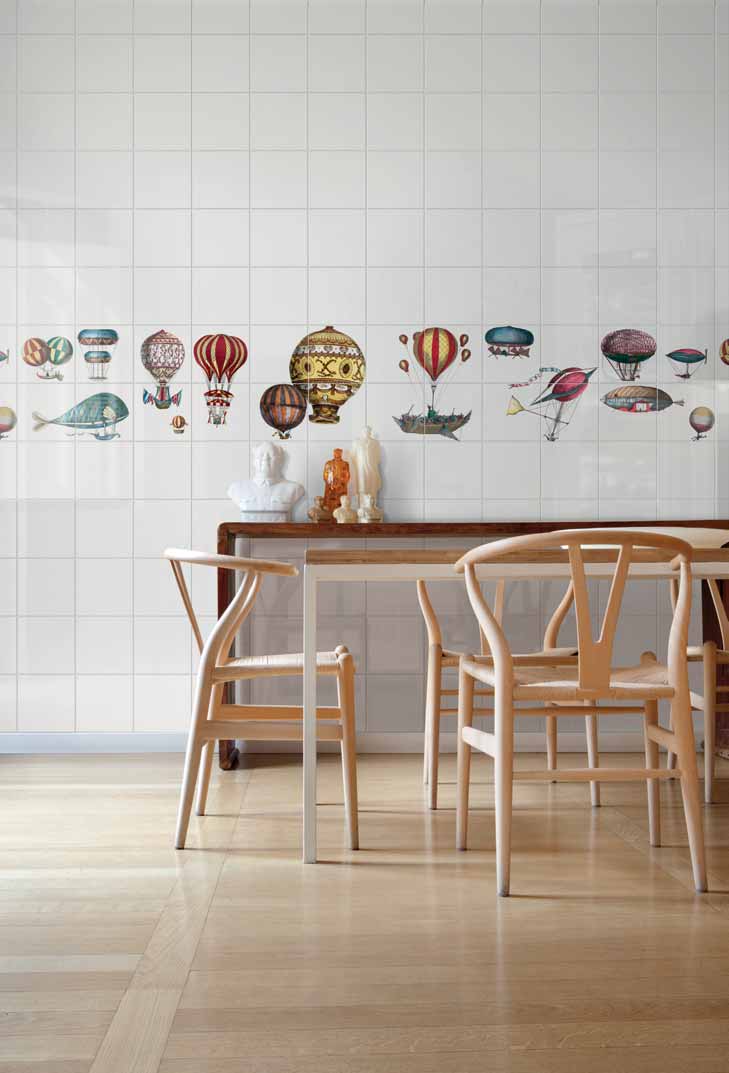
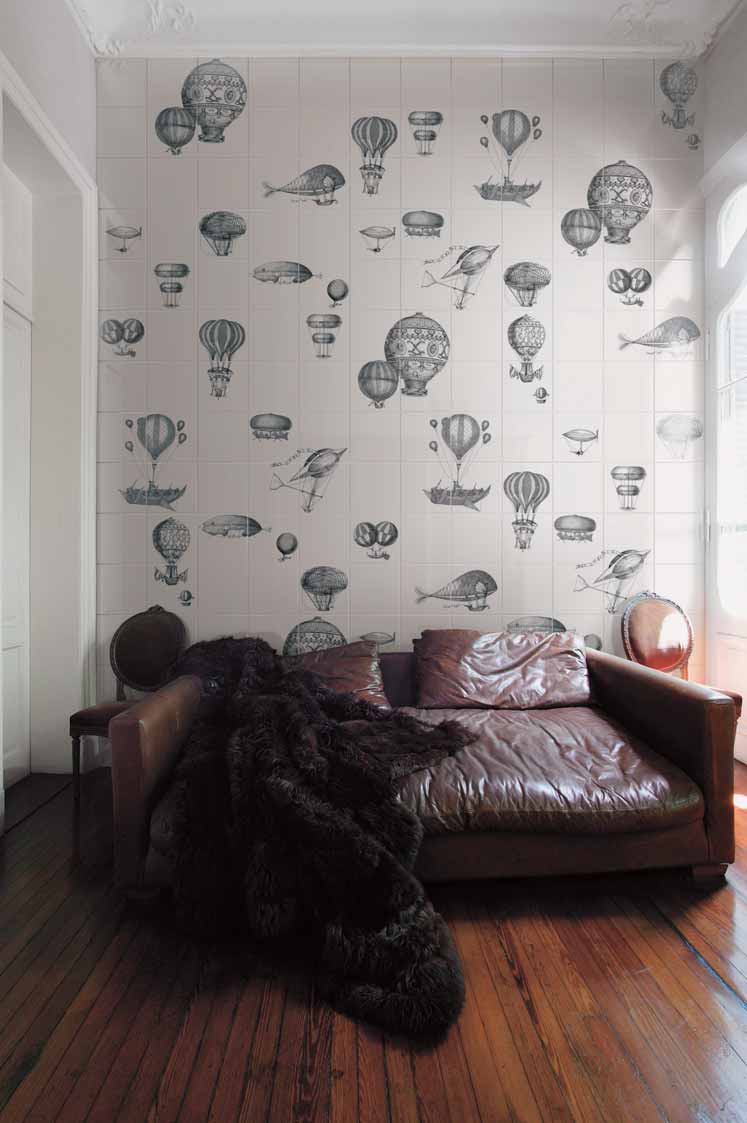
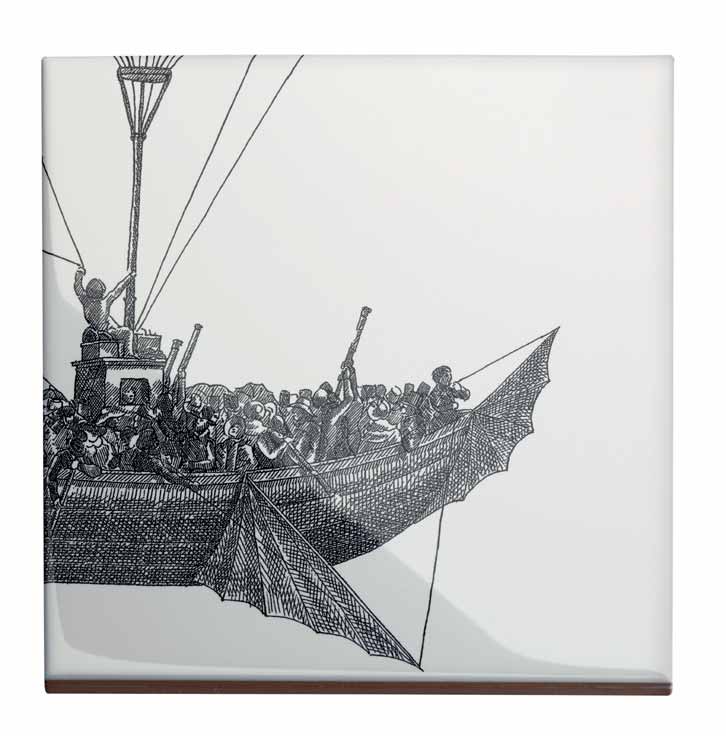
Fornasetti · Macchine Volanti

Design: Fornasetti

Hot-air balloons, airships and sailing ships appear in two sets of 24 designs on 20 × 20 cm tiles.

Seven series document the collaboration between Fornasetti and Ceramica Bardelli.

Soli e Lune · Fornasettiana · Macchine Volanti · Tema e Variazione · Ultime Notizie · Libreria · Lunario del Sole

  1. 1966Historical documentation

    Boquet

    Boquet appears in Ceramica Bardelli's official 1966 collection chronology, among its early decorative tile experiments.

  2. 1967Historical documentation

    Teorema

    Teorema was an early success for Ceramica Bardelli, known for geometric motifs; the company chronology dates it to 1967.

  3. 1971Historical documentation

    Pezzo T

    Pezzo T appears in the official 1971 company chronology as part of Ceramica Bardelli's early formal and decorative research.

  4. 1977Historical documentation

    Fili

    Fili is documented in Ceramica Bardelli's official 1977 chronology, illustrating its exploration of graphic motifs on ceramic surfaces.

  5. 1978Historical documentation

    I Gessati

    Design: Giovanna Lietti

    I Gessati is dated 1978 in the company profile. The Mater Ceramica archive links the series to Giovanna Lietti's graphic research.

  6. 1988Historical documentation

    Le maschere

    Le maschere appears in the company chronology in 1988, reflecting Ceramica Bardelli's sustained exploration of decorative imagery.

  7. 1990Historical documentation

    Gio Ponti

    Design: Gio Ponti

    The Gio Ponti collection is documented in 1990 and highlights Ceramica Bardelli's dialogue with Gio Ponti's graphic and decorative heritage.

  8. 1991Historical documentation

    Soli e lune Fornasetti

    Design: Piero Fornasetti

    Soli e lune Fornasetti is documented in 1991, bringing Fornasetti's figurative repertoire to ceramic surfaces.

  9. 2001Historical documentation

    Colore&Colore

    Colore&Colore is recorded in the official Ceramica Bardelli chronology for 2001, reflecting the development of the brand's colour language.

  10. 2018Discontinued

    Pittorica

    Design: Studiopepe

    Pittorica by Studiopepe was presented in 2018 and received an Archiproducts Design Award that year. It is now discontinued.

  11. Discontinued

    Cromia

    Cromia by Ceramica Bardelli explores solid colour and chromatic depth on glossy surfaces. The collection is part of the archive and is discontinued.

    Cromia

  12. Discontinued

    Fili — reissue

    Fili is a porcelain stoneware reissue of textile-inspired patterns, documented in the Ceramica Bardelli Fili catalogue. This record concerns the reissue and is separate from the historical 1977 collection. The reissue is discontinued.

    Fili — reissue

  13. Discontinued

    Hexa – Hexa Matt

    Hexa – Hexa Matt is the family documented in the Ceramica Bardelli catalogue dedicated to glossy and matt hexagonal surfaces. This record concerns the family withdrawn from the commercial catalogue, now discontinued.

    Hexa – Hexa Matt

  14. Historical documentation

    Key Point

    Design: Berger e Stahl

    Key Point, designed by Berger and Stahl, reached the final selection for the 1991 Compasso d'Oro according to Mater Ceramica.

  15. Historical documentation

    Serie 24

    Mater Ceramica records Serie 24 for its Disney-character motifs developed in the late 1970s.

  16. Discontinued

    SODA

    Design: Daria Zinovatnaya

    SODA by Daria Zinovatnaya explores geometry and colour on 25×25 cm porcelain tiles. Its historical catalogue is preserved; the collection is discontinued.

  17. Historical documentation

    Tekne

    Design: Daniele Bedini

    Tekne is a historic collection attributed to architect Daniele Bedini by Mater Ceramica.

  18. Discontinued

    Trame

    Trame by Ceramica Bardelli interprets sheet-metal textures and industrial design. The collection is part of the archive and is discontinued.

    Trame

  19. Discontinued

    Tubes

    Design: Dainelli Studio

    Tubes, designed by Dainelli Studio for Ceramica Bardelli, interprets the rhythm of ribbed surfaces through ceramic reliefs. The collection is part of the archive and is discontinued.

    Tubes

  20. Historical documentation

    Zenit

    Design: Enzo Didone

    Zenit is a historic series by Enzo Didone from the 1970s, documented by Mater Ceramica.

  21. Historical documentation

    Zigurat

    Design: Enzo Didone

    Zigurat is a historic Enzo Didone collection from the 1970s, recorded by Mater Ceramica.